

Many business owners assume that if a design is unique, it can be protected as a trademark. While that may be true for logos, names, and branding elements, it is not always true for product features. One of the most important limitations in trademark law is known as the functionality doctrine.
This doctrine plays a critical role in determining what can and cannot be protected. If a feature is considered functional, it cannot be registered as a trademark, no matter how recognizable it becomes.
Understanding the functionality doctrine is essential before filing a trademark application. It can help you avoid refusals, protect your brand more effectively, and choose the right type of legal protection for your product.
What Is the Functionality Doctrine?
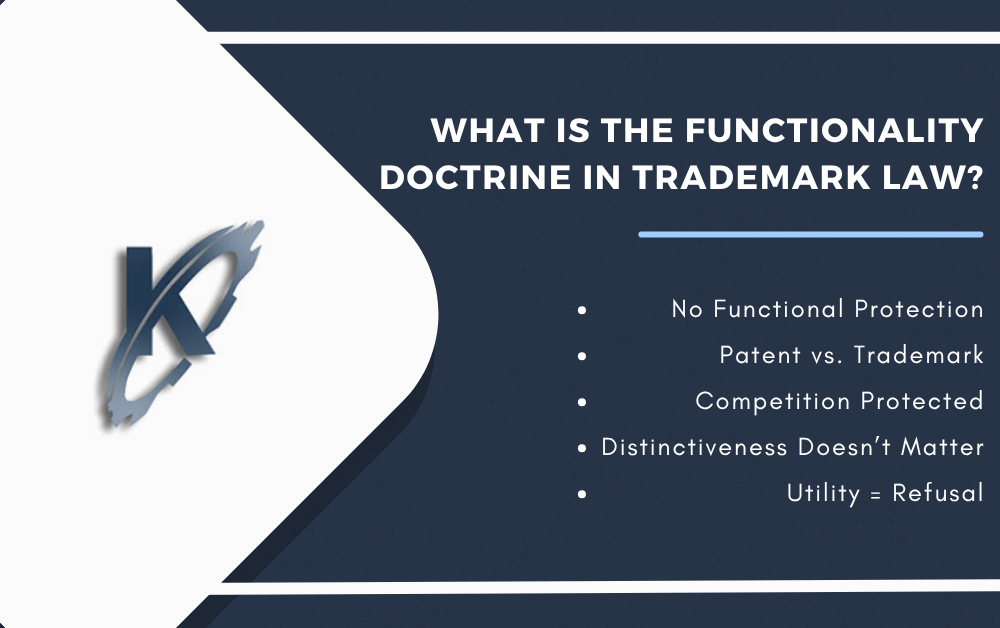
The functionality doctrine is a legal rule that prevents trademark protection for functional product features. In simple terms, trademark law does not allow businesses to claim exclusive rights over features that serve a useful purpose.
Trademarks are meant to identify the source of goods or services. They are not intended to protect how a product works, performs, or is constructed. When a feature is essential to the use or purpose of a product, or when it affects cost or quality, it is considered functional.
If a feature is functional, it must remain available for competitors to use. As a result, it cannot be registered as a trademark.
Why the Functionality Doctrine Exists
The functionality doctrine exists to maintain a fair and competitive marketplace. Without it, companies could use trademark law to gain permanent control over useful product features.
Trademark protection can last indefinitely as long as it is maintained. If functional features could be trademarked, a company could effectively secure a monopoly over a useful design forever. This would limit competition and slow innovation.
The doctrine ensures that useful product features remain in the public domain. It allows competitors to improve, replicate, and build upon existing designs without facing trademark restrictions.
Trademark Law vs. Patent Law: Understanding the Difference
To fully understand the functionality doctrine, it is important to distinguish between trademark law and patent law.
Patent law protects inventions and functional features. It gives inventors exclusive rights to their innovations, but only for a limited period of time. Once a patent expires, the invention becomes public and can be used by others.
Trademark law, on the other hand, protects branding elements that identify the source of goods or services. This protection can last indefinitely, as long as the mark continues to be used.
The functionality doctrine ensures that these two areas of law remain separate. Functional features must be protected through patents, not trademarks. Once patent protection ends, those features are free for public use.
Key Supreme Court Cases Behind the Doctrine
The functionality doctrine has been shaped by important Supreme Court decisions that clarify its purpose and application.
In Qualitex Co. v. Jacobson Products Co., the Court explained that trademark law should promote competition by protecting brand identity, not inhibit it by granting control over useful product features. The Court emphasized that functional features cannot be trademarked because doing so would interfere with legitimate competition.
In TrafFix Devices, Inc. v. Marketing Displays, Inc., the Court reinforced this principle. It made clear that even if a feature has become associated with a particular brand, it cannot be protected if it is functional. Evidence of acquired distinctiveness does not overcome functionality.
These cases highlight how strictly courts enforce the functionality doctrine.
What Makes a Feature “Functional”?
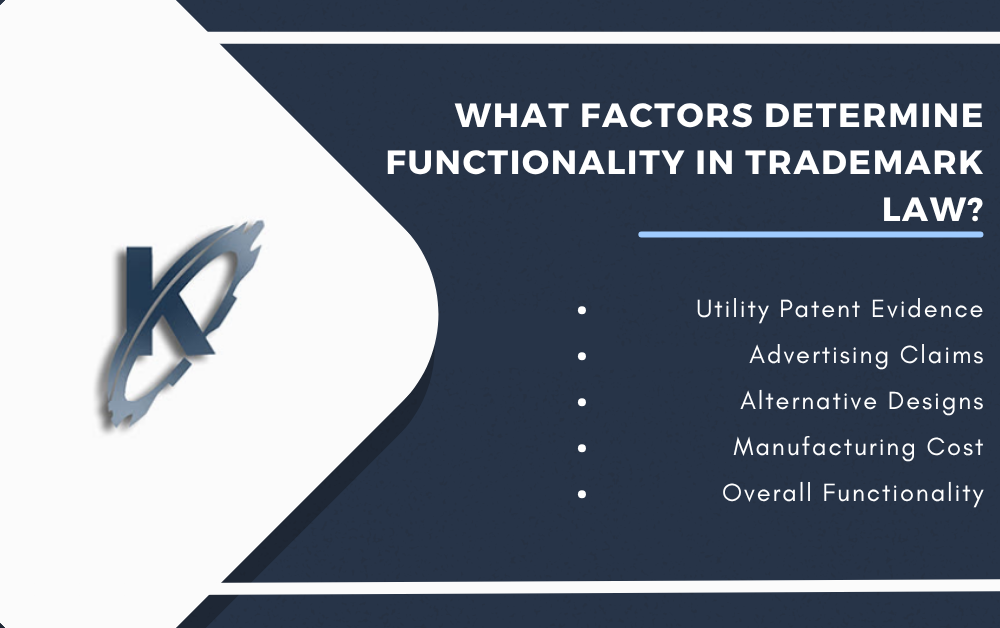
A feature is considered functional if it is essential to the use or purpose of a product or if it affects the product’s cost or quality.
In practical terms, a feature may be functional if it:
- Improves how the product performs
- Makes the product easier or cheaper to manufacture
- Enhances durability or efficiency
- Provides a competitive advantage unrelated to branding
Examples of functional features include:
- A product shape designed for better grip
- A design that reduces production costs
- A feature that improves safety or performance
Even if only part of a design is functional, it may still prevent trademark protection for the overall feature.
Can Functional Features Ever Be Trademarked?
The answer is no. Functional features cannot be protected as trademarks under any circumstances.
This is true even if:
- Consumers strongly associate the feature with a specific brand
- The feature has been used for many years
- The design is widely recognized in the marketplace
Unlike other trademark issues, functionality cannot be overcome by proving distinctiveness or consumer recognition. If a feature is functional, it is automatically excluded from trademark protection.
Why the Functionality Doctrine Matters for Businesses
The functionality doctrine has real-world implications for businesses developing products and brands.
If a company attempts to trademark a functional feature, the application will be refused. This can lead to wasted time, increased costs, and delays in securing protection.
It also means that businesses must carefully separate their branding from their product design. Investing heavily in a design that cannot be protected can leave a company vulnerable to competitors copying those features.
Understanding the doctrine early allows businesses to make better strategic decisions about how to protect their intellectual property.
How to Avoid Issues with the Functionality Doctrine
Avoiding a functionality refusal starts with proper planning before filing a trademark application.
Businesses should:
- Focus on branding elements rather than product functionality
- Identify non-functional design features that can serve as trademarks
- Separate useful features from decorative or arbitrary elements
- Consider patent protection for functional innovations
- Conduct a legal review before filing
Taking these steps can significantly improve the likelihood of successful trademark registration.
How an Attorney Can Help
Determining whether a feature is functional is not always straightforward. It often requires a detailed analysis of how the feature is used and how it impacts the product.
A trademark attorney can:
- Evaluate whether a design is likely to be considered functional
- Identify protectable branding elements
- Recommend alternative protection strategies
- Prepare and file stronger applications
- Respond to USPTO refusals
Working with an attorney early in the process can help avoid costly mistakes and improve the chances of success.
What to Know About the Functionality Doctrine Before Filing
The functionality doctrine is a fundamental principle of trademark law that prevents businesses from using trademarks to control useful product features. While trademarks can protect brand identity, they cannot be used to protect how a product works.
Understanding the difference between functional features and branding elements is essential before filing a trademark application. By recognizing these limitations early, businesses can choose the right protection strategy and avoid unnecessary refusals.
If you are unsure whether your design qualifies for trademark protection, Keener Legal can help you evaluate your options and guide you through the process with confidence.