

When a business develops a unique product design, packaging configuration, or trade dress, trademark protection may seem like the logical next step. However, not every design feature qualifies for trademark registration. One of the most common obstacles applicants face is a determination that the proposed mark is functional.
Functionality plays a critical role in trademark law because trademarks are intended to protect source identifiers, not useful product features. If a feature is considered functional, it generally cannot be protected as a trademark regardless of how recognizable it may be.
So how does the USPTO determine whether a design is functional? The answer often involves a set of legal considerations known as the Morton-Norwich factors. Understanding these factors can help businesses evaluate potential trademark issues before filing an application.
What Is Functionality in Trademark Law?
Functionality refers to whether a product feature serves a utilitarian purpose rather than a branding purpose. Trademark law protects names, logos, symbols, and other indicators that help consumers identify the source of goods or services. It does not protect product features that are useful or necessary to the operation of a product.
A product feature may be considered functional if it:
- Is essential to the use or purpose of the product
- Improves how the product works
- Affects the cost of manufacturing
- Affects the quality or performance of the product
The functionality doctrine exists to preserve fair competition. If businesses could obtain trademark rights in useful product features, they could potentially gain perpetual control over features that competitors need to use.
This is one reason functionality refusals are treated differently than many other trademark refusals. If a feature is functional, registration is generally prohibited.
For additional background, readers may also find Keener Legal’s discussions of the functionality doctrine, functionality refusals, and trade dress protection helpful.
Why Functionality Matters
The functionality doctrine helps maintain the distinction between trademark law and patent law.
Patents protect inventions and useful product features for a limited period of time. Trademarks, on the other hand, can last indefinitely as long as they continue to be used and maintained.
Allowing businesses to trademark functional product features would effectively grant permanent protection to features that patent law intends to place into the public domain after patent rights expire.
As a result, courts and the USPTO carefully analyze whether a feature serves a utilitarian purpose before granting trademark protection.
What Are the Morton-Norwich Factors?
When examining functionality, the USPTO frequently considers a set of factors that originated in the case In re Morton-Norwich Products, Inc.
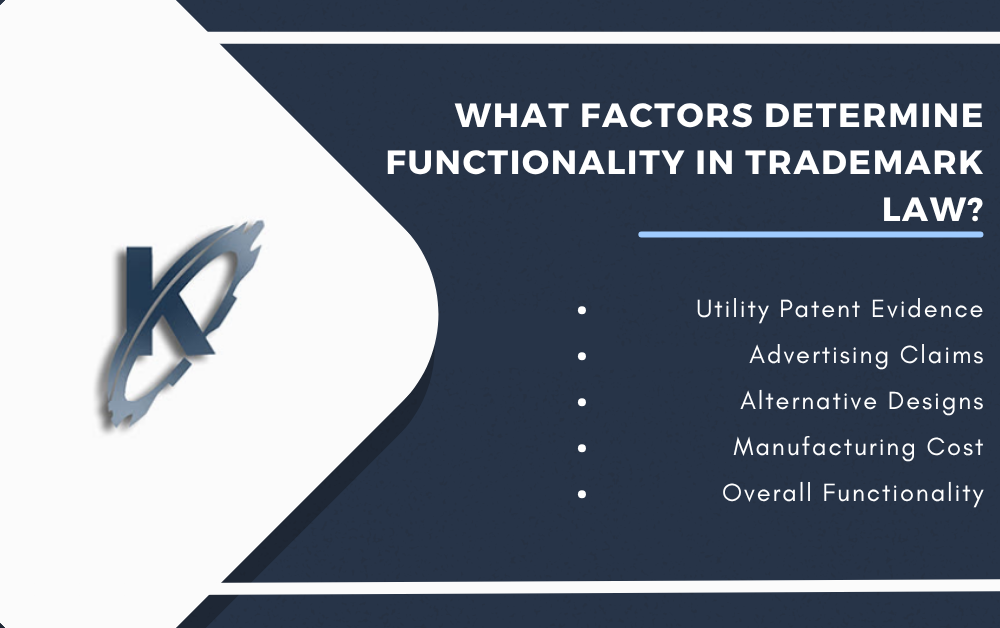
These factors help determine whether a product feature is functional and therefore ineligible for trademark protection. They include:
- The existence of a utility patent that discloses utilitarian advantages.
- Advertising that promotes the utilitarian advantages of the design.
- The availability of alternative designs.
- Whether the design results from a comparatively simple or inexpensive method of manufacture.
Not every factor must be present in every case. In some situations, one factor may provide enough evidence to support a functionality refusal. The USPTO evaluates the totality of the evidence when making its determination.
Does a Utility Patent Show That a Feature Is Functional?
The first Morton-Norwich factor focuses on utility patents.
A utility patent can provide strong evidence that a product feature is functional because patents are specifically designed to protect useful inventions. If a patent describes how a particular design improves performance, efficiency, or utility, the USPTO may view that as evidence that the feature is functional.
Courts have repeatedly held that utility patents can carry significant weight in functionality determinations. In some cases, patent evidence alone may be sufficient to support a refusal.
Example of Patent Evidence
Imagine a company develops a bottle cap with a unique ridge pattern that makes it easier to grip and open. The company obtains a utility patent describing how the ridge pattern improves user grip and reduces slippage.
If the company later attempts to register the ridge pattern as trade dress, the patent could become strong evidence that the feature is functional rather than source-identifying.
The USPTO may conclude that the ridge pattern exists because it works better, not because consumers recognize it as a brand identifier.
Can Advertising Be Used as Evidence of Functionality?
The second Morton-Norwich factor examines advertising and promotional materials.
Many businesses unintentionally create functionality evidence through their own marketing. When advertising emphasizes how a design improves performance, efficiency, durability, or convenience, those statements may support a finding that the feature is functional.
The USPTO often reviews:
- Product brochures
- Website content
- Sales materials
- Product packaging
- Promotional videos
Marketing claims that focus heavily on utility can become evidence during trademark examination.
Example of Problematic Advertising
Consider a manufacturer seeking trademark protection for the shape of a tool handle.
If the company’s advertising repeatedly states:
- “Designed for superior grip”
- “Reduces hand fatigue”
- “Improves leverage and control”
those statements may support the argument that the handle shape serves a utilitarian purpose.
While these benefits may help sell products, they can also create challenges when seeking trademark protection.
Do Alternative Designs Matter?
The third Morton-Norwich factor examines whether alternative designs are available.
Historically, if competitors could achieve the same result using different designs, that fact sometimes weighed against a finding of functionality. However, modern functionality analysis has evolved.
The Supreme Court’s decision in TrafFix Devices, Inc. v. Marketing Displays, Inc. clarified that once a feature is found functional under the traditional test, courts do not necessarily need to analyze alternative designs.
That does not mean alternative designs are irrelevant. They can still be considered in certain cases. However, they are no longer viewed as a requirement for proving functionality.
For applicants, this means that simply pointing to alternative designs may not be enough to overcome a functionality refusal.
Does Manufacturing Cost Affect Functionality?
The fourth Morton-Norwich factor examines whether a design results from a comparatively simple or inexpensive method of manufacture.
If a particular design reduces production costs or simplifies manufacturing, the USPTO may view that feature as functional.
Example
Suppose a company develops a packaging design that uses less material and requires fewer manufacturing steps than competing designs.
If the company attempts to trademark the packaging configuration, the USPTO may conclude that the design provides a cost-saving advantage. This could support a finding that the design is functional.
The key question is whether the design exists primarily because it offers manufacturing benefits rather than source-identifying benefits.
Does the USPTO Need All Four Factors to Refuse Registration?
No.
One of the most common misconceptions is that all four Morton-Norwich factors must support functionality before the USPTO can issue a refusal.
Courts have repeatedly explained that functionality determinations depend on the overall evidence presented in a particular case. In some situations, a utility patent or advertising evidence alone may be enough to support a refusal.
The USPTO does not use a checklist approach. Instead, examining attorneys evaluate the totality of the evidence and determine whether the design is functional as a whole.
How Examining Attorneys Investigate Functionality
When an examining attorney suspects a proposed mark may be functional, the investigation often goes beyond the trademark application itself.
The USPTO may review:
- Utility patents
- Patent applications
- Advertising materials
- Product literature
- Competitor products
- Industry standards
- Applicant websites
In many cases, the USPTO will issue a request for information asking the applicant to provide additional materials relevant to the Morton-Norwich factors. These requests may include inquiries about patents, advertising, alternative designs, and manufacturing methods.
Failure to provide requested information can create significant challenges during examination.
Why Functionality Analysis Focuses on the Overall Design
Functionality analysis generally focuses on the overall design rather than isolated individual elements.
Applicants sometimes argue that certain portions of a design are decorative or arbitrary. However, if the overall design is functional, the presence of a few non-functional details usually will not change the outcome.
Courts frequently evaluate how the various features work together and whether the overall configuration serves a utilitarian purpose.
Functional Features vs. Overall Appearance
For example, a product may contain decorative accents, colors, or shapes. If the overall configuration improves performance, efficiency, or usability, the design may still be considered functional.
The functionality analysis focuses on the design as consumers encounter it in the marketplace.
Common Misunderstandings About Functionality
Doesn’t Every Product Feature Perform a Function?
In a general sense, yes.
A bottle holds liquid. A chair supports weight. A lamp provides light.
However, trademark law distinguishes between features that merely perform a function and features whose specific design makes the product work better. The latter are more likely to be considered legally functional.
Can Consumer Recognition Overcome Functionality?
Generally, no.
Unlike many trademark issues, functionality is an absolute bar to registration. Even if consumers strongly associate a design with a particular company, the feature may still be unregistrable if it is functional.
Can Functional Features Be Protected Another Way?
In many situations, patent protection may be the more appropriate form of intellectual property protection for useful product features.
Patents and trademarks serve different purposes, and understanding that distinction is critical when developing an intellectual property strategy.
How Businesses Can Avoid Functionality Problems
Businesses can reduce the risk of functionality refusals by:
- Conducting a legal review before filing
- Evaluating existing patents and patent applications
- Avoiding marketing that emphasizes utilitarian advantages
- Focusing on distinctive branding elements
- Developing a comprehensive trademark strategy early
The earlier functionality issues are identified, the easier they are to address.
How Keener Legal Can Help
Functionality questions can be surprisingly complex. Product design, packaging, trade dress, patents, advertising, and manufacturing considerations can all play a role in determining whether a feature is eligible for trademark protection.
Keener Legal helps businesses:
- Evaluate trade dress applications
- Assess functionality risks before filing
- Respond to USPTO Office Actions
- Develop trademark registration strategies
- Protect valuable brand assets
Protect Your Brand Before You File
If you are considering trademark protection for a product design, package configuration, or trade dress, contact Keener Legal before submitting your application. An early legal review can help identify functionality concerns and improve your chances of successful registration.
Conclusion
The Morton-Norwich factors remain one of the most important tools used to determine functionality in trademark law. Utility patents, advertising claims, alternative designs, and manufacturing considerations can all influence whether a feature qualifies for trademark protection.
Because functionality determinations depend on the totality of the evidence, every case requires a careful review of the facts. Understanding these factors before filing can help businesses avoid costly refusals and develop stronger intellectual property strategies.
When questions arise about trade dress, product configurations, or functionality issues, experienced trademark counsel can provide valuable guidance throughout the registration process.